

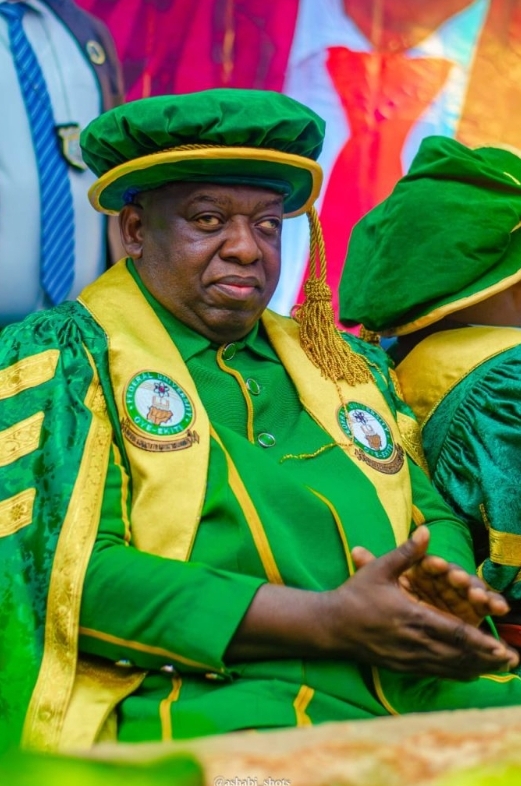

Is fuoye about to make negative headlines yet again? Immediate past VC to be probed by current administration! When Professor Joshua Olalekan Ogunwole assumed office as the fifth substantive Vice-Chancellor of the Federal University Oye-Ekiti (FUOYE), expectations were high that a new era of stability, growth and institutional consolidation would follow. However, four months into his administration, the atmosphere within the University appears dominated less by development initiatives and more by investigations, panels, suspensions, queries and disciplinary actions.
No one will argue against the necessity of accountability. Institutions thrive when standards are upheld and abuses are addressed. But accountability itself raises an important moral and administrative question: should justice be selective, retrospective and seemingly concentrated on a few individuals, or should it be holistic and fair enough to inspire confidence rather than apprehension?
Most of the issues currently being brought under scrutiny allegedly originated during the administration of the immediate past Vice-Chancellor, Professor Sunday Abayomi Fasina. Ironically, Professor Ogunwole was not an outsider during that period. Following his tenure as Vice-Chancellor of Bowen University, he was appointed Deputy Vice-Chancellor in charge of Strategic Partnerships, Research, Innovation and Linkages (SPRIL), a position deliberately and specially created by the then administration. That appointment not only placed him at the heart of University Management but also enhanced his profile ahead of the Vice-Chancellorship contest. It is therefore legitimate to ask: where was the current Vice-Chancellor when these alleged irregularities were taking place? As a member of the Management team, was he unaware of what transpired? If there were systemic problems, should responsibility not be viewed collectively rather than being reduced to isolated targets? These questions are not intended to shield anyone from scrutiny, but they speak to the principle that those who seek equity must themselves come with clean hands.
Another issue that deserves attention is the propriety of applying recent decisions of Senate and Council retrospectively. The first semester of the 2025/2026 academic session had already commenced before Professor Ogunwole assumed office. Governance within a university system ought to be guided not only by legality but also by fairness and established traditions. Retroactive actions, however well-intentioned, often raise questions about procedural justice.
Even more worrisome is the image of FUOYE itself. In the twilight of Professor Fasina’s administration, the University suffered considerable negative publicity. Many stakeholders had hoped that the new administration would prioritize healing, reconciliation and rebuilding public confidence. Yet, since March, the institution has continued to generate headlines centred on probes, suspensions, removals, rustications and disciplinary measures. Within this short period, the once-thriving Directorate of Part-Time Studies has reportedly been shut down. A Director of Entrepreneurship and a Deputy Dean of Student Affairs, as well as the President of the SUG have all been removed or suspended. Some students have faced rustication, and panels have become commonplace. The impression being created, rightly or wrongly, is that an atmosphere of crisis is gradually replacing one of academic development. Meanwhile, there are more pressing concerns demanding urgent attention. Across both the Oye and Ikole campuses, overgrown vegetation and environmental neglect are becoming increasingly visible. A university’s physical outlook is a reflection of its administrative priorities. Stakeholders expect the environment to reflect excellence, aesthetics and order.
Questions are also being raised about the University’s Entrepreneurship programme. Entrepreneurship education has often featured prominently in FUOYE’s media narratives, but concerns persist over inadequate infrastructure and funding for practical training. Students reportedly pay #5000 entrepreneurship fees annually, yet practical components, which account for a significant percentage of continuous assessment, sometimes depend on external interventions, and appeals for students’ personal support.
This naturally raises another question: who exactly is exploiting the students? Is the burden solely on Directors and Coordinators, or should the larger issue of how these fees are utilized receive equal attention? Transparency demands that stakeholders be provided with answers. No institution can prosper in an atmosphere where fear overshadows creativity and where investigations become more visible than innovation. Universities flourish through scholarship, infrastructure, research, peace and shared vision. They are not built primarily through endless probes and adversarial engagements. Perhaps this is the moment for reflection. The administration of Professor Joshua Olalekan Ogunwole has an opportunity to redefine the narratives. Rather than perpetuating the cycle of negative headlines that has recently characterized FUOYE, the focus should shift towards reconciliation, reorientation, development, environmental renewal, innovation, staff morale and students’ welfare.
Accountability is essential, but selective justice risks creating new divisions rather than strengthening the institution. History will remember administrations not merely by the number of panels they set up or the queries they issued, but by the enduring legacies they left behind. The question confronting stakeholders today is simple but profound: Is FUOYE destined to continue being known for controversies and negative publicity, or will the present administration rise above recriminations and write a new chapter defined by growth, stability and excellence?

For the Federal University Oye-Ekiti, the answer to that question may well determine the character and reputation of the institution for years to come.