


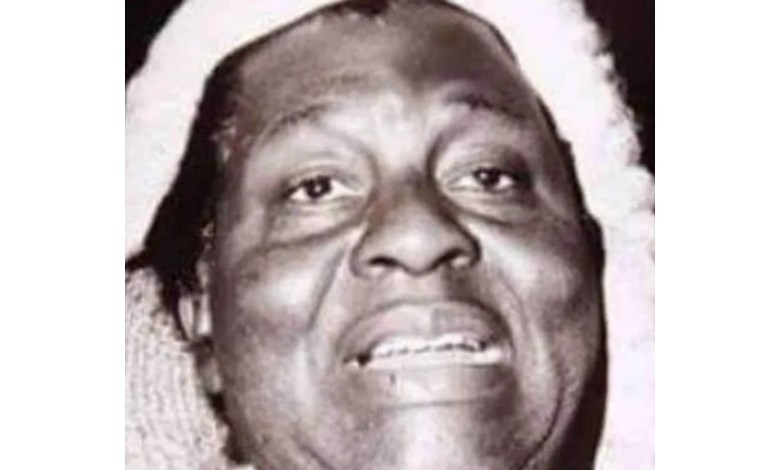

His intellectual endowment aside, his presentational style and manner of articulating his views in clear, lucid format which made it easy to comprehend his arguments, added up to the substance of an enigmatic profile of Nigeria’s first SAN.
It was this drive and resourcefulness that often prodded this legal icon to seek new frontiers in our law, trudging new terrains of legal advocacy and plucking out some obscure but recondite points of law, qualities which endeared him to many lawyers and judges. But this quality too often led him as in 1987, to ask for the impossible – that the Supreme Court should overrule itself!
Before l go into the details of Chief Williams’ application, let me recap an incident where the erudite lawyer made an unusual request.
Tuesday, October 4, 1983, at the Supreme Court, Williams made an unusual request. The Supreme Court, the apex of Nigeria’s judicial pyramid was filled to capacity with political party loyalists. Former governor of Anambra State, Chief Jim Ifeanyi Nwobodo had lodged an appeal at the Supreme court over the governorship election in the State against his rival, Chief Christian Chukwuma Onoh who was declared the winner. It was the first of such appeals at the Supreme Court.
Chief Fredrick Rotimi Alade Williams, SAN, then 62, counsel to Chief Nwobodo was on his feet for five hours battling Nwobodo’s case and anchoring his submission on the alleged falsification of election results in three constituencies namely Ezeagu, Igbo-Etiti and Isi-Uzo.
Weary with the tedium of the marathon five-hour submission, Chief Williams, an undeniable personification of legal practice in Nigeria and a mythic image at the Bar, made an unusual request from the Supreme Court Justices. It was a request only a lawyer of his caliber could make.
Williams: “My Lord, can I sit down?
Justice Sodeinde Sowemimo (Presiding): “Yes, very well.”
Williams: “I mean to sit down and address the court. I have been standing for the past five hours.”
Sowemimo: “ Ah, Chief Williams, I don’t think I am in the position to ask you to sit and address the court. We better adjourn till tomorrow.”
And the court adjourned.
Such was the esteem in which the erudite attorney was held, although it was not always like that for a man of Williams’ stature.
It takes the likes of “Timi the law” to initiate such moves.
It was the case of Prince Yahaya Adigun and two others v.The Attorney General of Oyo State and 18 Others. The subject matter was a chieftaincy dispute at Iwo, now of Osun State.
On May 20, 1987, the Supreme Court delivered its final judgment in Williams’ appeal where two of the three claims of the appellants were granted.
The first claim of the appellants, who were Chief Williams clients and which was not granted, was for a declaration that by virtue of the customary law prevailing in Iwo, the Ogunmakinde (Appellants’) Ruling House was the only ruling house from which the appointment to the Oluwo of Iwo chieftaincy was to be made.
In dismissing this claim, the Supreme Court however said that “proper inquiry to be the basis of a new and proper declaration should be set into motion so that the stool vacancy can be filled within a minimum delay.”
The Appellants, through their counsel, Chief Williams then brought an application under the “inherent jurisdiction of the Supreme Court to amend its judgment to delete the dismissal of the first claim and substitute with a decision granting the said application.”
This introduced, instantly, a new equation to the nation’s legal algebra.
Here was a novel development which the Supreme Court did not find funny as it unanimously rejected the plea, stating that there was no constitutional provision for the review of the judgment of Supreme Court and that by virtue of section 215 of the 1979 constitution, no appeal could lie to anybody or person from any determination of the Supreme Court.
Mr. Justice Kayode Eso (JSC as he then was) did not mince words as he flatly told Chief Williams that his (Williams’) attempt was like waking up a dead body.
His words: “The decision of the Supreme Court is final. Final in the sense of the real finality in so far as the particular case before the court is concerned. It is final forever, except there is a legislation to the contrary and it has to be a legislation ad hominem.”
Justice Eso’s veiled legislation reference was to a 1970 situation akin to what happened in what is now popularly referred to as Lakanmi’s case, is unmistaken. Then the Federal Government on May 9, 1970, passed a Decree – Federal Military Government (Supremacy and Enforcement of Power) Decree No.28 of 1970 which upturned the Supreme Court decision of April 24, 1970 and declared as void, the Forfeiture of Assets Validation Decree No. 45 of 1968.
In the same measure the Supreme Court refused this novel application of Chief Williams, the Court also viewed with seriousness, the allegation of bias Chief Williams had leveled against the court in 1987 in the case of The Architects Registration Council of Nigeria, In re-Majoroh V Professor M. A. Fassassi.
In the court’s lead ruling, Justice Eso frowned at hints that the court was accused of bias.
He said: “This application of Chief Williams, SAN is that this panel of the Supreme Court as at present constituted, should not hear this appeal on the grounds that the panel has already taken its stand against the appellant as a result of an order which the court made yesterday …. I am not aware of a single instance in the whole history of the Supreme Court, when the court has been requested to give an assurance of impartiality. I do hope that that day will never dawn when this court will be inhibited from asking any question which it considers necessary in pursuance of the interest of justice nor when it could legislate to make an order which it considers desirable in pursuance thereof, on the fear that learned counsel might interpret that order as a bias. To charge a court with bias is a very serious thing indeed. To ask for court’s assurance is more serious still.”
Conservative and apolitical, Chief Williams’ tradition of practice, to a large extent, was mechanical, far within the ambience of the law for the sake of law notion which shunned the view of law as a medium for social engineering and in this style of practice, Chief Williams invariably found guilt in legal technicalities to exculpate many clients from liability.
I decided to reference this Chief Williams attempt at the Supreme Court and the measured tone the court responded, while dismissing his novel application, vis-a-vis the seemingly irreverent language a Supreme Court justice used against a counsel in dismissing a similar application in Alhaji Mustapha Jokolo v. Governor of Kebbi State and 12 others, decided by the Supreme Court on May 15, 2026.
In the appeal, the applicant’s counsel had approached the Supreme Court to review and set aside its judgement of June 4, 2025 on the same matter.
In her concurring judgment, Hon. Justice Chioma Nwosu-Iheme had used very strong words on the applicant’s counsel.
The words include “this irresponsible counsel”, among others

With profound respect to Justice Nwosu-Iheme, l don’t think she or the Supreme Court has the right to stop a lawyer from appearing in any court without the sanction or imprimatur of the Legal Practitioners Disciplinary Committee (LPDC). Losing his right of audience in all courts without going through LPDC if he doesn’t pay the N50m costs, seems to me an overreach. This is without prejudice to the conduct of the counsel. It would be interesting if this counsel decides to challenge this aspect in court, novel as it may sound. In addition, her usage of words like “filing this trash”, “irresponsible”, “uncultured”, with greatest respect, doesn’t appear to be expressions that should be used at the apex court. I have great respect for Nwosu-Iheme, JSC but I expected a more measured and elevated language at that level just like how the Supreme Court handled the similar situation regarding Chief Williams which l referenced above.