


The speed and absence of rancorous debates with which the legislative arms of government have expedited the passage of the State Police Bill should be an indication to any discerning mind that the nation as a whole is yearning for more changes in our constitution. Nigeria, perhaps more than any other African country, is a nation blessed with enormous human and natural resources, yet burdened by the contradictions of its own structure. More than sixty-five years after independence, the country remains a paradox; a giant in potential, but still searching for the formula that will transform promise into prosperity.
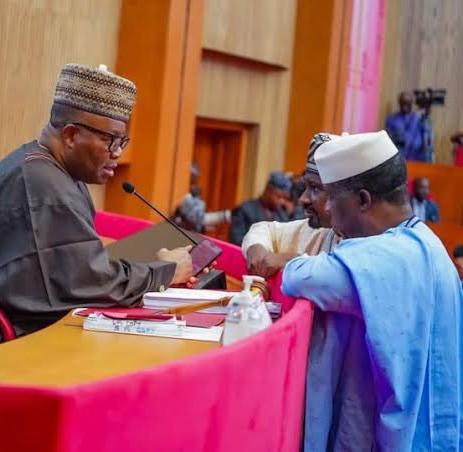
The latest conversations emanating from the National Assembly, particularly the proposal by Senate Majority Leader, Senator Opeyemi Bamidele, for a six-year single tenure for Presidents and Governors, as well as the passage of the State Police Bill by the Senate, have once again reignited one of the oldest debates in our national history: the question of restructuring and the need to make Nigeria work better.
For many observers, these developments are far more than routine legislative activities. They are perhaps the clearest indication yet that the country is gradually acknowledging a truth that has become increasingly difficult to ignore; that the present structure of the Nigerian federation has become inadequate for the demands of the twenty-first century. Nigeria today, is a federation in name, but a Unitary State in Practice.
Nigeria proudly describes itself as a federation, and indeed, the Constitution says so. Yet, in practical terms, the nation operates more like a unitary system, as power is wholly concentrated in Abuja. Resources are concentrated in Abuja. Security is controlled from Abuja. Even matters that should ordinarily belong to States and local communities are subjected to approvals and regulations from the centre. The consequence is obvious. The Thirty-six states, with the Federal Capital Territory look towards monthly allocations from the Federation Account as though they are departments of a central government rather than federating units endowed with initiative and responsibilities. Ironically, this was not how Nigeria began.
At independence in 1960, and even under the Republican Constitution of 1963, the regions enjoyed considerable autonomy. The Northern Region, the Western Region, and the Eastern Region competed vigorously and healthily. The Western Region under Chief Obafemi Awolowo pioneered free education, established Africa’s first television station, and laid the foundation for industrial development. The Northern Region built an economy around groundnut pyramids, cotton, and agriculture, while the Eastern Region leveraged palm produce and commerce to create one of the most vibrant economies in Africa. None of these regions waited for monthly allocations from Lagos, then the Federal Capital. Competition, not dependence, drove development. Healthy rivalry, not excessive centralization, stimulated growth.
Beginning with the coup of 1966, successive military administrations, perhaps out of necessity and convenience, gradually centralized powers. Decrees replaced constitutional federalism. More States were created, but with less autonomy. What emerged was a structure that retained the name “federation” while operating substantially like a unitary state. Unfortunately, democracy inherited that structure. Today, Nigeria still runs a military-inspired constitution under a civilian environment. Perhaps that contradiction explains many of our difficulties.
Another unfortunate feature of our national life has been inconsistency; our endless policy somersaults. Over the decades, Nigeria has moved from parliamentary democracy to presidential democracy. From regions to states; from agriculture to oil dependency; from development plans to abandoned projects; from import substitution to liberalization; from austerity measures to structural adjustment; from State-owned enterprises to privatization, and ffrom centralized policing to renewed agitation for State police. Each administration introduces reforms, while the next often abandons them. Programmes are started with fanfare and discontinued midway. Institutions suffered from instability, while policies lacked continuity. Of course, the result is very predictable. Nations are built by consistency, and not by policy somausaults. Nigeria, unfortunately, has often chosen discontinuities and disruptions.
Now, talking on the six- year single term proposal. The proposal for a six-year single tenure is not entirely new. It has surfaced at different times in Nigeria’s history, yet, and perhaps never before has the argument appeared more compelling. The current arrangement allows four years with the possibility of re-election for another four years. On paper, it appears ideal, but in practice, however, the second-term syndrome has become one of the greatest distractions in governance. Barely two years after assumption of office, many leaders become more concerned with political calculations than developmental calculations. Cabinet appointments begin to reflect electoral interests, while projects are selected with political considerations. Governance gives way to campaigns, while alliances and permutations overshadow policy implementation. State resources are sometimes deployed, directly or indirectly, towards securing second terms. Consequently, governance becomes trapped in a permanent cycle of politics. A six-year single tenure may provide a solution to this cyclonic political phenomenal. Without the burden of seeking re-election, leaders can devote their energies entirely to governance. They can undertake difficult reforms without fear of political backlash.
They can focus on legacy rather than survival, and more importantly, the enormous financial resources expended on frequent elections can be redirected towards developmental projects. Nigeria spends billions every electoral cycle. Campaigns divide communities; political tensions rise, ethnic and religious sentiments are inflamed, while litigations linger. A single six-year tenure would significantly reduce the frequency of these disruptions, and perhaps governance would once again become more important than politics.
Now, State Police. State policing is a reform whose time has come. For decades, the issue of State Police generated fears and controversies. Opponents worried that governors might abuse State-controlled police. Supporters argued that a country as vast and diverse as Nigeria cannot effectively be policed from Abuja. Recent realities have strengthened the arguments of the proponents. Insecurity has become increasingly sophisticated, while also observing that every criminal act is local. Banditry, communal conflicts, armed robbery, cybercrime,terrorism, etc. These threats require local intelligence and rapid response, yet, a Police Commissioner in a State still receives operational directives from Abuja. Clearly, the limitations of such centralization have become obvious. State Police offers opportunities for better intelligence gathering and quicker responses. Communities understand their terrain, and traditional institutions possess valuable information and local authorities know the peculiarities of their environment Security becomes more proactive than reactive, and of course, safeguards must accompany such reforms. Independent police commissions, Judicial oversight, clear constitutional boundaries, protection of fundamental rights, institutional checks and balances, etc; these mechanisms can prevent abuse and strengthen accountability.
The Six Geopolitical Zones. Perhaps one of Nigeria’s greatest untapped assets lies in its six geopolitical zones. Though currently used mainly for political balancing, they can become platforms for economic transformation, and engine room of development. Each zone possesses unique comparative advantages. The South-West is naturally positioned for technology, education, manufacturing and commerce, while the South-East remains a hub of entrepreneurship and industrial creativity. The South-South possesses enormous opportunities in oil, gas, maritime and blue economy sectors, while the North-Central has vast agricultural potential and mineral resources. The North-West offers opportunities in agriculture, leather and textile industries, while the North-East can become a centre for renewable energy, livestock and solid minerals. Strengthening regional cooperation does not threaten national unity, rather, it enhances it. Competitions amongst regions produced prosperity in the First Republic, and so, there is no reason why it cannot do so again. Development commissions, industrial corridors, regional rail systems, energy cooperation, agricultural clusters and common markets can transform the geopolitical zones into centres of economic excellence.
True Federalism, as the missing Link. No nation can achieve sustainable development with excessive centralization which obtains at the moment. America thrives because States possess powers. Canada flourishes because provinces enjoy autonomy. Germany prospers through cooperative federalism, while India’s diversity is managed through decentralization. Nigeria must learn from these examples. Strong States do not weaken the centre; strong regions do not divide nations. On the contrary, strong federating units create stronger countries.
The need to review the Exclusive Legislative List. If Nigeria is to achieve its desired goals, fiscal federalism must become a reality. States should control greater portions of their resources while contributing to the centre. Power should move closer to the people. Local solutions should address local challenges. Innovation should replace dependency, and Competition should replace complacency.
Beyond Politics, I want to believe that this is not just another empty conversations, but a moment for national rebirth. Ultimately, this conversation is bigger than Senator Opeyemi Bamidele, the Senate Majority Leader, bigger than the Senate, and even bigger than the current administration. It is about the future; it is about whether Nigeria will continue to operate structures inherited from military centralization or summon the courage to embrace genuine federalism; it is about whether governance will remain hostage to endless elections or whether leaders will have the opportunity to focus on service rather than survival. It is about whether security will continue to be over-centralized or become more responsive to local realities; it is about whether the six geopolitical zones will remain mere political expressions or evolve into engines of prosperity. Above all, it is about whether Nigeria is finally ready to become in practice what it has always claimed to be in theory; a true federation.

History teaches that nations rise, not merely because they possess resources, but because they possess the wisdom to organize those resources effectively. Nigeria’s greatest challenge has never been the absence of ideas, and neither has it been the absence of talent. What has often been lacking is the courage to reform. Perhaps, and just perhaps, the current constitutional conversations present another opportunity; an opportunity not merely to amend laws, but to create institutions, and an opportunity to redefine the Nigerian project itself, and when future generations look back upon this era, perhaps they may say that this was the moment Nigeria finally chose substance over symbolism, federalism over over-centralization, development over politics, and national rebirth over national stagnation. For a country with such immense possibilities, that choice can no longer be postponed. The time has come, and history is waiting.