



A nation that refuses to learn from its history condemns itself to repeating its mistakes, and a nation that remains imprisoned by its past equally denies itself the opportunities of the future.
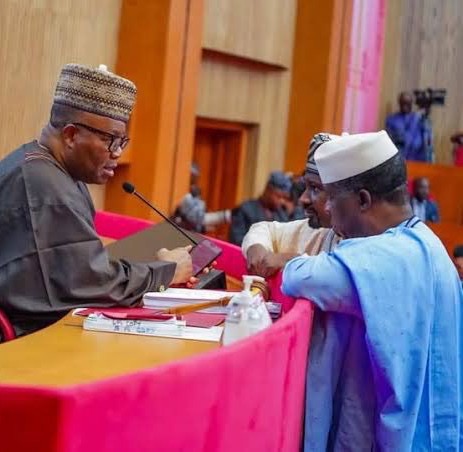
Nigeria is once again standing at one of those rare moments in history when the decisions of today will reverberate far beyond the present generation. The constitutional review currently before the National Assembly is not merely another legislative exercise, it is a defining national moment; one that presents an opportunity to rethink the very foundations upon which our federation rests and to lay a firmer foundation for a more prosperous, secure and united Nigeria.
Among the proposals now generating widespread public discourse are the introduction of a six-year single tenure for Presidents and Governors, the establishment of State Police, and the broader call to enthrone true federalism through a deliberate devolution of powers. While opinions understandably differ on these issues, there can be little argument that they deserve to be examined not through the narrow prism of partisan politics, but through the broader lens of history, national development and posterity.
Every generation is confronted with defining choices. Some generations merely preserve what they inherited, while others summon the courage to improve it. History has always reserved its highest honours for the latter. The distinguished members of the National Assembly, together with members of the thirty-six State Houses of Assembly who will eventually determine the fate of these constitutional amendments, now stand before such a defining moment. They possess an opportunity that comes only occasionally in the life of a nation; the opportunity to shape history rather than merely witness it.
It is often tempting, in moments of constitutional reform, to evaluate every proposal by asking who stands to benefit politically, which party gains advantage, which office holder becomes stronger, or which region appears favoured. Such questions are natural in politics, but they are not the questions history asks. History asks only one enduring question: Did those entrusted with leadership leave their nation better than they met it? Nigeria’s post-independence experience offers profound lessons. The First Republic demonstrated that a decentralised federation encouraged healthy competition among the regions. The Western Region invested proceeds from Cocoa into free education, industrialisation and modern infrastructure. The Northern Region built a thriving economy around agriculture and livestock. The Eastern Region became renowned for commerce, industry and palm produce. None waited for monthly allocations from the centre before pursuing development. Productivity, innovation and healthy rivalry became the driving forces of national progress. The military era, however, fundamentally altered that trajectory. In the understandable quest for national cohesion during turbulent times, powers became progressively concentrated at the centre. States multiplied, but genuine autonomy diminished. Democracy eventually returned, but the highly centralised governance structure remained largely intact. Thus, Nigeria today describes itself as a federation while operating many of the features of a unitary system. The consequences are evident in the dependence of many States on federal allocations, the concentration of security architecture in Abuja, and the limited constitutional space available for States to innovate and address their peculiar developmental challenges.
It is against this historical backdrop that the ongoing constitutional conversations should be understood. The objective is not to dismantle the federation but to strengthen it. Strong federating units do not weaken a nation; they reinforce it. Around the world, enduring federations derive their strength not from excessive centralisation but from an intelligent distribution of powers that allows each component unit to maximise its comparative advantage while remaining committed to the larger national interest.
The proposal for a six-year single tenure deserves careful and patriotic consideration. Experience has shown that the present four-year renewable tenure often subjects governance to the distractions of perpetual electioneering. Barely halfway into their first terms, many elected executives begin to devote enormous political energy towards securing re-election. Governance gradually competes with politics. Public appointments become politically strategic. Development projects are selected with electoral considerations in mind. Long-term planning is often sacrificed on the altar of immediate political survival. A single six-year tenure has the potential to alter this trajectory. Freed from the burden of re-election campaigns, leaders would have the opportunity to devote their entire tenure to governance. Difficult but necessary reforms could be pursued without the anxiety of electoral consequences. Public resources currently expended on frequent election cycles could be redirected towards infrastructure, healthcare, education, agriculture and human capital development. Governance would increasingly be measured by legacy rather than longevity, by performance rather than political calculations.
Equally compelling is the case for State Police. The security challenges confronting Nigeria today, have become too complex and too localised to be effectively managed through an entirely centralised policing structure. Communities understand their peculiar security realities. Local authorities possess valuable intelligence. Traditional institutions remain indispensable partners in maintaining peace and order. Properly structured State Police, backed by constitutional safeguards against abuse, would enhance intelligence gathering, improve response time, strengthen community policing and complement Federal security agencies in protecting lives and property.
No less important is the imperative of true federalism. Federalism is not merely a constitutional arrangement; it is a philosophy of governance built on shared responsibility, local initiative and healthy competition. The six geopolitical zones already possess distinct economic strengths capable of transforming the nation’s fortunes if adequately empowered. The South-West remains Nigeria’s centre of commerce, technology and education. The South-East continues to demonstrate extraordinary entrepreneurial capacity. The South-South is endowed with immense maritime and energy resources. The North-Central serves as the nation’s agricultural heartland. The North-West holds enormous potential in agriculture, livestock and manufacturing, while the North-East possesses abundant opportunities in renewable energy, agriculture and solid minerals.
A truly federal Nigeria would encourage each Zone and each State to harness these comparative advantages, thereby creating multiple centres of economic growth instead of concentrating development around the Federal Government alone. Such healthy competition once propelled Nigeria’s development and can do so again. Learning from history, however, does not require us to become prisoners of history, and the objective is neither to romanticise the past nor to replicate it in every detail. Rather, it is to extract the timeless principles that produced success and adapt them to contemporary realities. That is precisely the opportunity now before Nigeria’s lawmakers. This constitutional review therefore demands statesmanship rather than partisanship, requires vision rather than expediency, and calls for courage rather than convenience. There are moments when legislators become more than makers of laws; they become architects of national destiny. This is undoubtedly one of those moments. Years from now, future generations may neither remember every speech delivered during these debates nor every amendment proposed on the floor of the National Assembly. What they will remember, however, are the consequences of the decisions taken today. They will either inherit a stronger federation capable of unleashing the enormous potential of its people, or they will continue to grapple with structural limitations that successive generations failed to address. That is why members of the National Assembly and the State Houses of Assembly must rise above transient political calculations and embrace the higher calling of nation-building. Their responsibility is not merely to legislate for today’s Nigeria but to prepare tomorrow’s Nigeria. Our country deserves institutions that promote productivity rather than dependency. It deserves constitutional arrangements that encourage innovation instead of over-centralisation. It deserves leaders who are free to govern without perpetual political distractions. Above all, it deserves a federation that functions not merely in constitutional language but in practical reality.

History has a remarkable way of remembering those who were presented with the opportunity to alter the course of a nation. It remembers those who placed country above self, posterity above popularity, and national interest above partisan considerations. The present generation of lawmakers now holds such an opportunity in its hands, and may they learn from the past without becoming imprisoned by it. May they summon the courage to build institutions stronger than personalities. May they strengthen the Nigerian federation through true federalism, embrace the merits of a six-year single tenure where it serves the national interest, support a well-regulated State Police system, and leave behind a constitutional legacy worthy of the hopes and aspirations of over two hundred million Nigerians. For nations are not transformed by wishful thinking, they are transformed by courageous decisions taken at defining moments. This is one of those moments, may Nigeria not allow it to pass.