


The Federal Government has announced the rollout of a nationwide digital education management platform designed to unify data collection and improve decision making across the country’s education sector.
The initiative, known as the Digital National Education Management Information System (DNEMIS), will be formally launched on Wednesday alongside the unveiling of the Public DNEMIS Portal and the inauguration of State Implementation Teams.
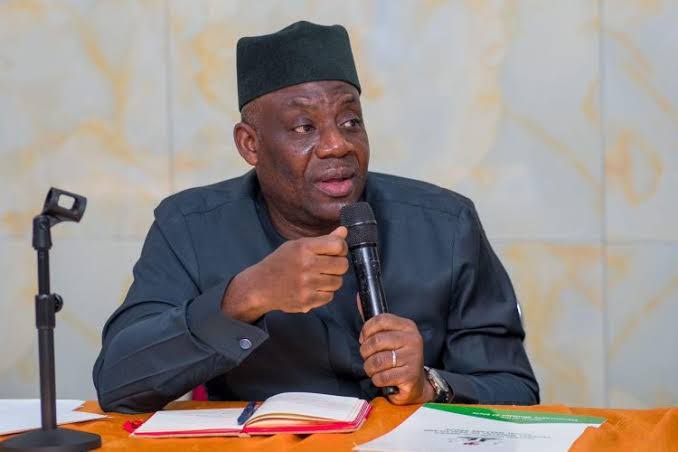
Addressing journalists in Abuja on Monday ahead of the launch, the National Project Coordinator of the Special Programmes Operations and Implementation Unit in the Office of the Minister of Education, Mr Adebayo Onigbanjo, said the new system would replace years of fragmented education records that have hindered effective governance and planning.
He said, “For many years, education planning and administration relied on fragmented systems, inconsistent reporting structures and limited access to reliable and timely data. These challenges constrained effective planning, weakened accountability and limited the sector’s ability to respond to emerging realities.”
According to Onigbanjo, the Federal Ministry of Education established the Nigeria Education Data Infrastructure (NEDI) to create a single framework for collecting, managing and standardising education data across the country
He described DNEMIS as the centrepiece of that framework.
“At the centre of this transformation is DNEMIS, a flagship component of NEDI and a major milestone in Nigeria’s journey toward a modern, integrated and digitally enabled education management system,” Onigbanjo said.
He explained that the platform would generate reliable, timely and easily accessible information to support budgeting, planning, policy formulation, monitoring and service delivery. It will also maintain a unified database covering learners, teachers, schools and public investments in education.
Onigbanjo noted that the initiative reflects the government’s determination to base reforms on credible information rather than projections.
“The progress recorded through NEDI and the implementation of DNEMIS reflects the Ministry’s broader commitment to ensuring that reforms are not only announced, but effectively coordinated, implemented and measured,” he said.
He added, “Data is no longer a back-office function. It is becoming the engine of education reform in Nigeria
Also speaking, the Special Assistant to the Minister of Education on Digital Communications and E-Learning, Miss Mojoyin Adebajo, said the platform was developed using the globally recognised District Health Information Software 2 (DHIS2), adapting the technology to strengthen education administration and evidence-based policymaking.
She explained that DNEMIS would digitise the Annual School Census, replacing manual data collection with an integrated electronic process.
“By digitising the Annual School Census process, the platform will provide government with timely, reliable and accessible education data to support planning, budgeting, policymaking and improved service delivery across Nigeria’s education system,” she said.
Adebajo added that the digital system would produce up-to-date information on schools, learners, teachers and infrastructure, helping government allocate resources more effectively and monitor education programmes more efficiently.
She also highlighted the Public DNEMIS Portal, which will make selected official education data available to researchers, journalists, policymakers, development partners, civil society groups and members of the public.
According to her, “This represents an important step toward expanding access to information and encouraging broader participation in conversations that shape the future of education in Nigeria
The officials further acknowledged the technical support provided by the United Nations Children’s Fund and the University of Oslo in developing the project.
Nigeria’s education sector has long been hampered by scattered and largely manual data collection systems, making it difficult to accurately track schools, teachers, enrolment and infrastructure. The lack of reliable information has affected planning, budgeting, teacher deployment and the monitoring of education outcomes.

The Federal Government expects DNEMIS, a key component of the Nigeria Education Data Infrastructure, to bridge these gaps by delivering real-time education data and supporting ongoing reforms under the Nigeria Education Sector Renewal Initiative led by the Minister of Education, Dr Maruf Tunji Alausa.