


A Serial Fraudster Operated a Fake Presidential Agency for Months, Right Under the Noses of Nigeria’s Intelligence Community?
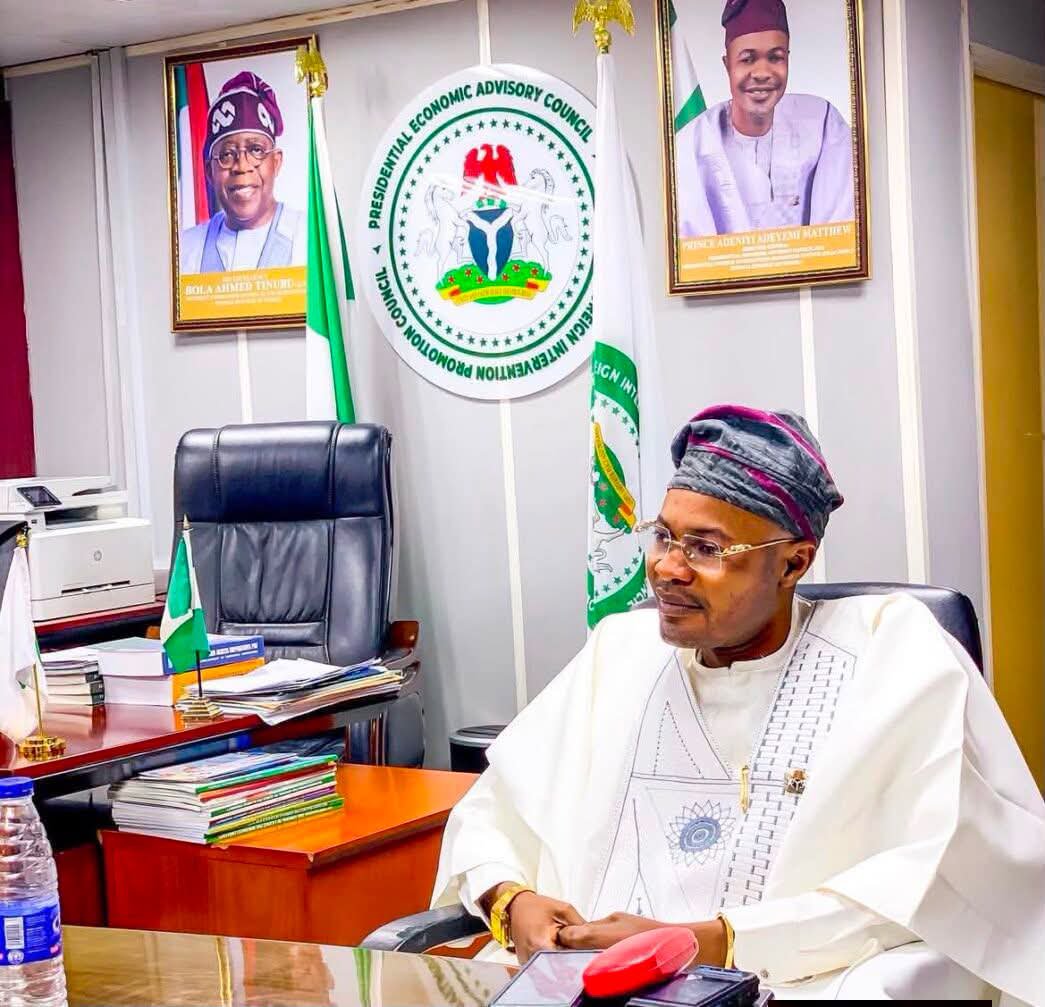
The Adeniyi Matthew saga is not merely a story of a brazen con artist. It raises a damning question mark over Nigeria’s national security architecture specifically, the Department of State Services (DSS). How does a man with a documented history of high-profile fraud ranging from impersonating a SUG President to running pyramid schemes in Ogbomosho, and the infamous 2016 “World Youth Organisation” scam that forced the UN to publicly disavow him reappear years later, forge a presidential appointment, secure an office in the Federal Secretariat, open a Central Bank account, and operate a fictitious agency for months without the DSS raising a single eyebrow?
The Intelligence Failure No One Is Talking About
The DSS is constitutionally mandated to detect and neutralise threats to national security and that includes impersonation of the state. Matthew gave press conferences. He engaged with diplomats. He allegedly claimed a waiver to employ 314 Nigerians. He was photographed with former President Obasanjo and splashed the image across national media. His face, his name, and his history are all publicly accessible. Yet the DSS, with its extensive intelligence-gathering apparatus, remained silent.
This raises an uncomfortable question: Did the DSS genuinely not know, or did someone choose not to act?
Is this a pattern of negligence or complicity?
Matthew did not operate from a hidden location. His “office” sat within the Federal Secretariat, a high-security government complex. Access to such spaces requires vetting, clearances, and approvals. For a fraudster to bypass all of this suggests either:
- Systemic negligence where civil servants failed to verify his forged letter because protocols were ignored.
- Active complicity where individuals within the system facilitated his access in exchange for consideration.
If it is the former, the DSS owes Nigerians an explanation for its intelligence failure. If it is the latter, then the DSS is not just an observer; it is part of the problem.
What are the duties of the SGF’s Office versus the Chief of Staff?
Let’s be clear: formal federal appointments are the exclusive constitutional and administrative function of the Office of the Secretary to the Government of the Federation (SGF). The Chief of Staff, while politically powerful, is not empowered to issue appointment letters for federal MDAs. Matthew’s forged letter, therefore, should have been immediately flagged by any official understanding this basic protocol.
The SGF’s office maintains the central registry for all federal agencies and appointments. If Matthew’s “Presidential Foreign Intervention Promotion Council” did not exist in that registry, why was he allowed to continue operating? Who in the SGF’s office failed to cross-check his credentials?
The Smoking Gun is the Budget inclusion!
Perhaps the most troubling aspect of this saga is the alleged inclusion of Matthew’s ghost agency in the national budget. The budget undergoes layers of scrutiny from the Executive to the National Assembly. For a fictitious agency to appear suggests that one or more legislators actively inserted it as a “constituency project.” These insertions are not anonymous; they leave a paper trail.
Which lawmaker championed this ghost agency? What committee approved it? Why did the Ministry of Budget and National Planning not flag an unrecognised MDA?
These are not rhetorical questions. They demand answers. Until they are asked publicly and relentlessly, the scandal remains incomplete.
Undoubtedly, Adeniyi Matthew is a suspected criminal that much is clear. But his crime is only possible because the institutions designed to prevent him either failed or looked away. The DSS cannot claim ignorance.
The SGF’s office cannot claim oversight. The National Assembly cannot claim innocence.
The question is no longer “What did Adeniyi Matthew do?” It is “Who in government helped him do it, and why are they still in office?”

Until those questions are answered, every Nigerian has the right to wonder: How many more ghost agencies are operating right now?