

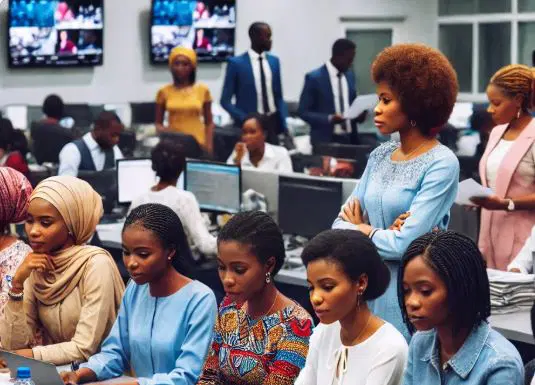

Nigeria Association of Women Journalists, Ekiti chapter, in collaboration with the Norwegian Union of Journalists (Norsk Journalistlag), has engaged women journalists in the state in a three-day capacity-building workshop to promote gender equity, safety, and gender-sensitive reporting.
The workshop, which brought together women journalists from various media organisations, focused on combating sexual harassment, intimidation, and other gender-based challenges confronting female media practitioners.
Speaking on the significance of the programme, a former NAWOJ vice-president, Zone D, Veronica Ogbole, said the initiative was part of a long-standing partnership between NAWOJ and the Norwegian Union of Journalists spanning over a decade.
Ms Ogbole explained that the programme evolved from gender-sensitive reporting to addressing safety concerns, workplace discrimination, and violence faced by women journalists within newsrooms and during field assignments.
According to her, findings by global journalism bodies showed that issues frequently reported by female journalists, such as sexual harassment and intimidation, are also prevalent within media organisations, necessitating targeted interventions.
She said the training manual developed for the programme equips women journalists with skills to identify, report, and respond to challenges such as discriminatory work practices, harassment, and the difficulty of balancing professional and family responsibilities.
A former national president of NAWOJ, Ifeyinwa Omowole, stressed the need for safety consciousness in journalism practice, urging journalists to prioritise personal security while carrying out their professional duties.
Ms Omowole said the training would expose participants to practical steps for safeguarding themselves against violence, harm, and negative consequences in hostile reporting environments.
Declaring the workshop open, the women’s affairs commissioner in Ekiti, Olapeju Babafemi, commended NAWOJ for adopting strategic collaborations with international partners, describing gender-sensitive reporting as vital to balanced storytelling, social inclusion, and national development.

(NAN)