


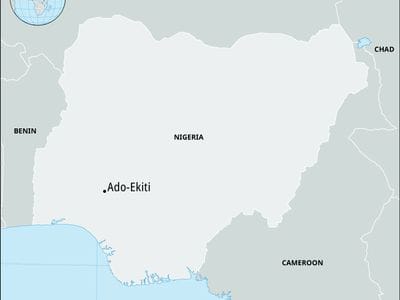

There is a difficult but unavoidable conversation that every growing society must have with itself: How do we preserve our history without allowing the past to prevent the future? That conversation is now taking place, perhaps rather painfully, in Ado-Ekiti, the capital of Ekiti State. The issue concerns the reported acquisition of portions of Irona/ Isato Quarters and adjoining areas for what has been described as the development of modern central business areas. The affected areas are described as cultural heritage buildings and lands, associated with the ancestral history of some Chieftancy ruling Houses and old families. Naturally, therefore, the prospect of government acquisition has generated emotions, apprehension and resistance.
Those who are opposed to the acquisition have raised concerns about due process, consultation, displacement, compensation and the possible loss of important historical and cultural landmarks. These concerns should not be dismissed. In a democracy, citizens have the right to ask questions about government actions affecting their homes, properties, livelihoods and heritage. Government, for its part, has a responsibility to explain clearly what it is acquiring, for what purpose, under what legal authority and what arrangements are being made for affected persons.
But beyond the emotions, there is another question that we must honestly ask ourselves: Can Ado-Ekiti continue to grow while every old building, every family compound and every piece of land is declared untouchable simply because it is described as ancestral? This is where sentiment must meet reality. Ado-Ekiti is no longer the small town of our fathers and grandfathers. The city has expanded dramatically. Its population has grown; its economic activities have multiplied; its educational institutions have expanded; its roads carry greater traffic; its commercial activities have moved far beyond the traditional centres of the old town.
Ado-Ekiti today is not merely one compact traditional settlement, it has grown into a major urban centre with several Local Government Development Areas and an expanding metropolitan population. The city is changing, whether we like it or not, and every city that grows must make room for the future. Modern markets require space. Efficient transport systems require planning. Urban renewal requires the reorganisation of old spaces. Roads, terminals, commercial centres, hospitals, schools, recreational facilities and other public infrastructure cannot always be built on empty land outside the city. Sometimes, the old must give way to the new. That is not necessarily an attack on history, it is the reality of civilisation.
The real question, therefore, should not simply be: “Why is government taking our ancestral land?” The more important questions should be: What exactly is the government planning to build? Is the project genuinely for overriding public good? Are affected persons being properly identified? Will those with legitimate interests be adequately compensated in accordance with the law? Will the development preserve, relocate or properly commemorate important cultural landmarks? Will the project ultimately improve the economic fortunes and quality of life of the people? These are the questions that deserve answers, but it is important that we do not mislead ourselves about the legal nature of land in Nigeria. The Land Use Act, which remains the foundational framework for land administration in the country, vests land in each State in the State Governor, to hold in trust and administer for the use and common benefit of Nigerians. It also provides the framework for the control, management and revocation of rights of occupancy for overriding public interest, subject to the law. This does not mean that government can act arbitrarily, not doers It mean that citizens have no rights. It does not mean that compensation and due process are irrelevant. It means, however, that the idea of an absolute, permanent and untouchable private ownership of urban land must be understood within the Nigerian legal framework.
The wise, reasonable citizen, therefore, should not merely shout against acquisition, the wise citizen should secure his or her interest through proper documentation. Every family that lays claim to ancestral land should, as much as possible, obtain an approved survey plan and pursue the appropriate title documentation, including a Certificate of Occupancy where applicable. Proper documentation does not prevent government from acquiring land for overriding public interest, but it gives the legitimate interest of the holder greater visibility and provides a stronger basis for engagement and compensation. In fact, this is one of the lessons that many families must learn.
We sometimes speak passionately about ancestral land while allowing family members to sell portions of the same ancestral land indiscriminately. We defend heritage against government, only to discover that some of the same heritage has already been sold piecemeal to private individuals and commercial interests. In many old urban quarters across Nigeria, the original family ownership of land has already become complicated by decades of sales, transfers, inheritance disputes and informal transactions. So, what exactly are we defending? A family heritage that has been properly documented and protected, or a sentimental claim to land that successive generations have themselves sold, divided and transferred? We must be honest with ourselves.
The experience of Ijoka and Okeyinmi in Ado-Ekiti also offers an important lesson. Whatever one’s political opinion about the administrations that undertook the acquisition, for road expansion, mega market, Transport Terminal, and part of the overhead bridge, it is difficult to deny that the transformation of the areas created a more modern urban environment, improved accessibility and stimulated economic activities. Without the courage to acquire land and make room for the road expansion, the Okeyinmi that Ado-Ekiti knows today might not have emerged in the same form, and neither will Ijoka, the ancestral home of the Ado- Ekiti ruling Houses became what they are today. For those rare sacrifices, one should give kudos to the affected noble families.
Development often requires difficult decisions. The same principle applies to the expansion of cities everywhere in the world. The great cities that we admire today were not built by preserving every structure exactly as it existed centuries ago. London, New York, Lagos, Abuja and countless other cities have repeatedly demolished, acquired, redesigned and reconstructed old spaces to accommodate new realities. The issue is not whether change should happen, the issue is whether change should happen responsibly. That is the balance Ado-Ekiti must now seek.
The government must communicate, and the affected communities must be heard. The traditional institutions must be respected, while the legal process must not be jettisoned. Those with legitimate interests must be treated fairly, and compensations paid, where legally applicable. Where historically significant sites are affected, the government should consider ways of preserving their memory, identity and cultural significance within the new development agenda, but the people of Ado-Ekiti must also understand that heritage is not the same thing as stagnation. A mud house may have witnessed the birth of several generations. A family compound may have immense sentimental value. A particular quarter may represent the history of a ruling house, but cities are living organisms. They grow; hey change; they expand; they reorganize themselves, and if Ado-Ekiti, just like any other mega city must become a modern, economically vibrant and properly planned city, certain things must inevitably give way.
The Ado-Ekiti of tomorrow cannot be forced to remain permanently imprisoned within the physical limitations of the Ado-Ekiti of yesterday. We cannot demand modern roads, efficient transportation, organised markets, better traffic management, expanded commercial opportunities and a beautiful urban environment, while simultaneously insisting that no old structure or ancestral space should ever be touched. We cannot have it both ways. Development requires land, and urbanization requires planning. Planning requires difficult choices, and difficult choices sometimes affect people who have emotional, historical or financial connections to the land involved.
That is why government must be humane, transparent and lawful, but that is also why citizens must be reasonable, informed and properly guided. No government should be allowed to hide behind the phrase “public interest” to act with impunity, and neither should every public project be opposed simply because somebody has described the affected land as “ancestral.” The future also has a right to exist. The children yet unborn have a right to inherit a better-planned Ado-Ekiti. They have a right to modern markets, efficient transport systems, better roads, improved public infrastructure and a city capable of supporting a growing economy. They have a right to inherit not only the stories of their ancestors, but also the achievements of their generation. The responsibility before us, therefore, is not to choose blindly between heritage and development, it is to find a responsible way to protect the memory of the past while building the future.
Let the government explain the project. Let the people ask questions. Let the law be followed, and let legitimate interests be protected, and appropriate compensations be paid where due. We must, however, be careful not to turn the legitimate emotional attachment to ancestry into an instrument for holding an entire city hostage to the past. Ado-Ekiti is growing, and the city cannot remain frozen in time. If we truly desire a modern, prosperous and beautiful capital city, we must understand one fundamental truth, and that is:for a city to grow, the past must respectfully make room for the future.

Lanre Ogunjobi writes from Ado-Ekiti