


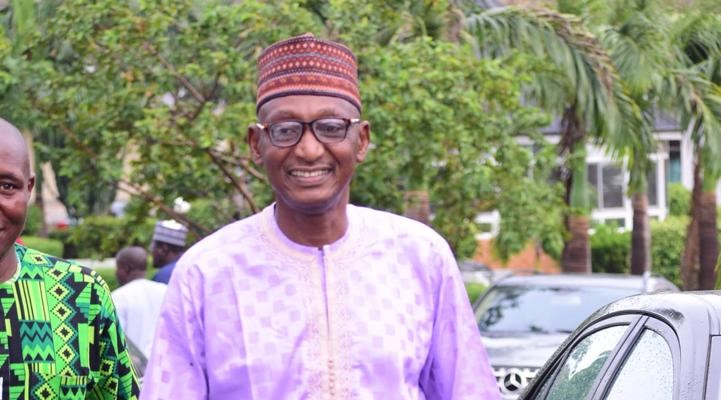

Retired Deputy Inspector General (DIG) of Police, Mohammed Usaini Gumel, has been picked as the Secretary of Projectv744 Network for Asiwaju.
Gumel hinted his new appointment to our Correspondent, during a telephone interview on Tuesday.
According to him, Project 774 Network for Asiwaju is organising a national sensitisation programme to mobilise citizens towards active participation in promoting security across the country.
The programme, scheduled for 27 July 2026 at the Ladi Kwali Hall, Abuja Continental Hotel, has the theme: “Our Security, Our Duty: Citizens Standing with Our Troops to End Terrorism, Banditry and Kidnapping.”
Gumel further stated that, ” the event is expected to attract prominent traditional rulers, religious leaders, government officials and other stakeholders to deliberate on practical ways of strengthening community participation in national security.”
He said the conference would conclude with a citizens’ declaration of commitment to support security agencies and work collectively towards ending insecurity in Nigeria.
The security expert urged Nigerians to take greater responsibility in tackling insecurity, describing security as, ” a collective duty that should not be politicised.”
He insisted that, “insecurity at the grassroots require community-driven solutions, stressing that criminal activities such as banditry and kidnapping are largely concentrated in the hinterlands.
Retired DIG Gumel, who is a doyen of Community Policing, noted that the Federal Government, under President Bola Ahmed Tinubu, has demonstrated commitment to addressing insecurity through reforms, including local government financial autonomy, which he noted should enable politicians at the grass root levels to play a more active role in safeguarding their communities.
According to him, traditional rulers, religious leaders, community volunteers and residents possess vital knowledge of their environments and should work closely with security agencies to identify and isolate criminal elements.
The retired police boss also commended the efforts and sacrifices of the military, police and other security agencies in the fight against terrorism, banditry and kidnapping, urging Nigerians to support security personnel instead of undermining their efforts.
Speaking on the proposed establishment of state police, retired DIG Gumel expressed strong support for the initiative, pointing out decentralized policing would strengthen community security and improve intelligence gathering.
He acknowledged concerns over possible abuse but maintained that any challenges could be addressed through constitutional amendments as implementation progresses.
He said: “The ongoing national conversation on State Police has attracted both strong support and genuine reservations. Those who oppose the reform often point to Nigeria’s historical experience with regional police and express concerns that decentralizing policing could lead to political abuse, threaten national unity, or undermine professionalism.
These concerns deserve respect. Constitutional reforms should never be undertaken lightly, especially where national security is concerned. Yet history should guide reform, not prevent it.
“Nigeria today is fundamentally different from the country that existed when the former regional police system was abolished more than five decades ago. Our democratic institutions have evolved considerably. Constitutional governance has become more entrenched. Judicial independence is stronger, legislative oversight is more robust, the media is more vigilant, civil society is more active, and citizens now enjoy unprecedented access to information and public accountability.
These institutional developments provide a far more suitable environment for designing a policing system that reflects contemporary democratic standards. Rather than allowing the mistakes of the past to discourage reform, we should use those lessons to build stronger safeguards against their recurrence.

“Equally important, decentralized policing is neither novel nor peculiar to Nigeria. It is a well-established feature of many federal democracies. Countries operating federal systems have successfully maintained national and subnational police services with clearly defined constitutional responsibilities, professional standards, independent oversight and effective coordination.”