



Last week, Congress put squarely on the table the question of whether the health of our democracy requires renovation of our colleges and universities. I believe the answer to that question is yes.
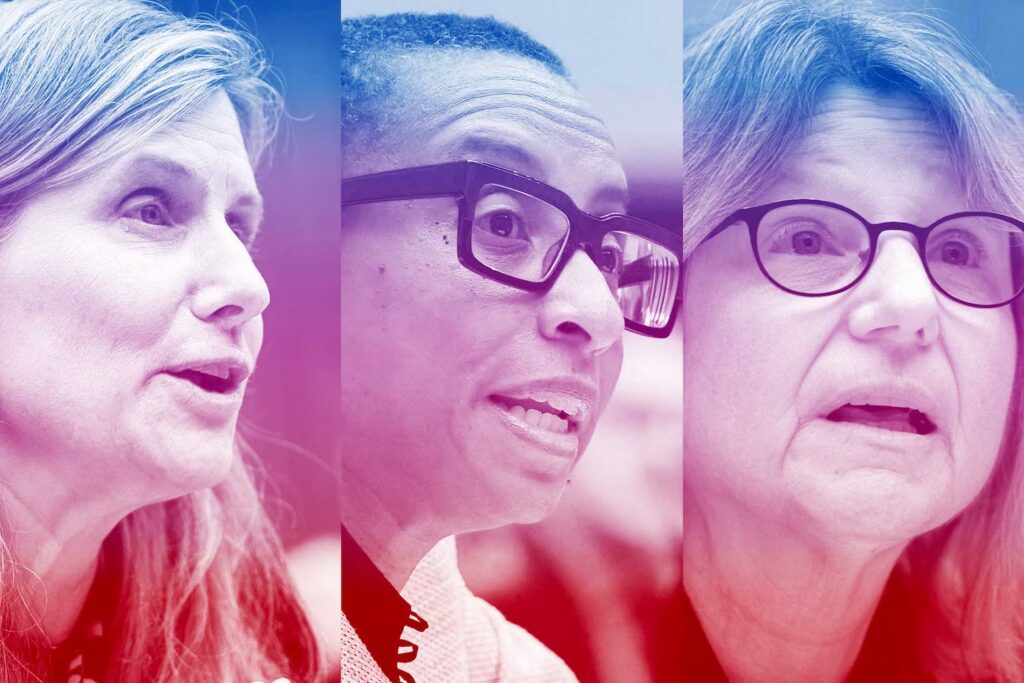
On Tuesday, the House Education and Workforce Committee held a hearing to investigate how Harvard University, MIT and the University of Pennsylvania are responding to antisemitism on their campuses. The hearing’s viral moment came when Rep. Elise Stefanik (R-N.Y.) asked a chain of questions that resulted in the three universities’ presidents saying that if someone urged the genocide of Jewish people, that merely might— “depending on the context” — be a violation of campus policies against bullying and harassment. Two of the three presidents — Harvard’s Claudine Gay and Penn’s Liz Magill — issued apologies or clarifications, and Magill has now resigned.
Important and clarifying as that moment was, the opening statement of Chairwoman Virginia Foxx (R-N.C.) gave the hearing a broader frame. Foxx questioned the health of universities generally and called attention to “a grave danger inherent in assenting to the race-based ideology of the radical left,” arguing that we are at “an inflection point” requiring a reshaping of “the future for all of academia.” The chairwoman’s theme was not antisemitism alone but whether the diversity, equity and inclusion efforts of college campuses have been a wrong turn for America’s intellectual culture.
While I stand by the goals of inclusion and belonging for college campuses — and consider those goals valuable for America writ large — I agree with Foxx that we have lost our way in pursuing them. We have gotten lost both in the thicket of debates about the First Amendment and in the swamps of particular tenets of anti-racism. How do we find our way back?
The First Amendment
On campuses these days, too few people understand basic concepts of academic freedom and free expression and how they interact with the equally important commitment to making sure that students can “learn free of discriminatory harassment,” to quote the Foundation for Individual Rights and Expression (FIRE). Because of that, we do not know how to protect intellectual freedom and establish a culture of mutual respect at the same time. But this must be our project.
Breaking down a large problem into discrete parts can help illuminate guiding principles. So let’s take the First Amendment flash points one by one.
 Follow this author’s opinions
First, how should we handle a protest in the classroom? This is straightforward — or should be. Any form of protest that disrupts the conduct of a class violates basic prohibitions against interference with the normal duties and activities of the university. I wish my own campus, Harvard, were clear on this policy. Some individual schools at the university are. Some aren’t. Work to change that, as you might imagine, is underway. Protecting the classroom from protest is necessary to protecting academic freedom — the right of those in the classroom to conduct the very activities of teaching and learning protected by academic freedom.

What about protests when speakers come to campus? Free-speech policies on many campuses do a reasonably good job of distinguishing between acceptable protest and substantial disruption that will be subject to sanction. After a lot of recent trial and error, campuses have learned to handle this specific case reasonably well.