



The Federal Government has moved closer to establishing state police, with the Presidency revealing that work on the constitutional framework is nearing completion after months of consultations involving key stakeholders.
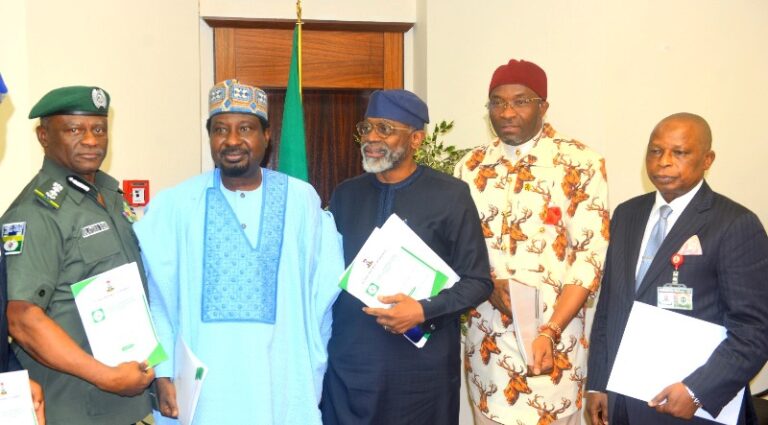
Chief of Staff to the President, Femi Gbajabiamila, disclosed this on Thursday after a high-level consultative meeting on state policing held at the Presidential Villa, Abuja.
According to him, deliberations on the proposed state police structure commenced several months ago following a directive from President Bola Tinubu, and discussions have now reached an advanced stage.
Gbajabiamila noted that while there is broad consensus on the need for state police, the process requires extensive constitutional and legal reforms to ensure a workable and sustainable framework.
We began discussions about three to four months ago on how to establish state police, as directed by President Tinubu. This is not something that can be achieved overnight because it involves critical constitutional and legal considerations,” he said.
He added that significant progress has been made and that the proposed constitutional amendment necessary for the creation of state police is expected to be unveiled soon.
“At this stage, our focus is on the constitutional amendment. The enabling legislation will follow thereafter. Those are the issues we have been examining during our deliberations,” he stated.
The Chief of Staff said the conversation has shifted beyond whether Nigeria should adopt state policing to how the system should be structured to address concerns relating to oversight, accountability, funding and operational effectiveness.
He explained that President Tinubu, a long-standing advocate of state police, would be presented with a comprehensive report on the outcome of the consultations.
The meeting formed part of ongoing efforts by the Federal Government to develop a framework aimed at strengthening Nigeria’s security architecture through decentralised policing.
Advocates of state police argue that the initiative would improve intelligence gathering at the grassroots level, enhance rapid response to security threats and empower sub-national governments to tackle local security challenges more effectively.
President Tinubu has repeatedly maintained that state police remains a critical component of efforts to address Nigeria’s evolving security concerns and improve the protection of lives and property across the country.

Among those who attended the meeting were Deputy Senate President Barau Jibrin, Deputy Speaker of the House of Representatives Benjamin Kalu, Inspector-General of Police Tunji Disu as well as other senior government and security officials.