




The recent disqualification of Engr. Kayode Ojo from the Ekiti State APC governorship primary has stirred mixed reactions across political circles. However, a closer look at the facts and the party’s constitutional provisions reveals that the decision was not born out of politics or personal rivalry, but from a deliberate effort by the All Progressives Congress (APC) to uphold internal integrity and prevent future legal embarrassment.
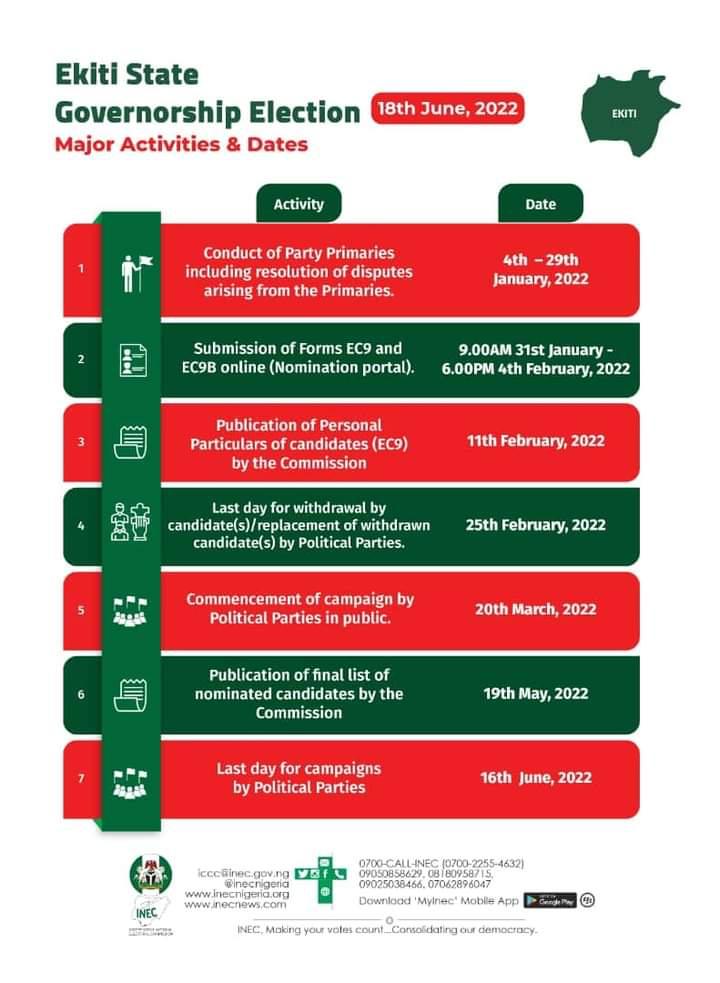
1. Failure to Meet Nomination and Spread Requirements
Under the APC Constitution and its guidelines for aspirants, every contender must present a stipulated number of valid nominators drawn across all Local Government Areas in the state.Engr. Ojo reportedly submitted 122 names, but party screening revealed that 68 of them were not valid or registered APC members, leaving only 54 authentic nominators, well below the minimum requirement.This shortfall meant that his nomination was technically defective and non-compliant with the party’s established rules.
2. Non-Compliance with Party Constitution and the Electoral ActIn addition to the issue of nominators, the screening committee cited other lapses in documentation and internal compliance.The APC Constitution (Article 9.1 and related provisions) demands that aspirants must be financially up to date, duly registered, and adhere strictly to the party’s internal nomination processes.
Furthermore, the Electoral Act 2022 compels political parties to ensure transparency and due process in primaries.Engr. Ojo’s case, according to findings, failed to satisfy these intertwined conditions.
3. Internal Petitions and Verification Irregularities
Several petitions were lodged by party members, questioning the authenticity of Ojo’s nomination forms and the legitimacy of some signatories.This prompted the Screening Committee to refer his case to the National Working Committee (NWC) for further scrutiny.
The NWC, after reviewing both the petitions and screening reports, decided that his clearance could not stand on solid legal ground, thus upholding the disqualification.4. APC’s Caution After the Bayelsa “David Lyon” ExperienceIt is no secret that the APC leadership has grown more cautious after the Bayelsa State governorship setback, where David Lyon was disqualified by the Supreme Court just days before inauguration due to a technical issue in his deputy’s nomination papers.That painful experience taught the party that strict internal vetting is better than external embarrassment.
Hence, in Ekiti, the party chose to take the hard but necessary decision rather than risk another post-primary legal disaster that could cost it an entire election victory.5. A Lesson in Internal Discipline and Due ProcessThe disqualification of Engr. Kayode Ojo, while disappointing to his supporters, sends a clear message, that the APC is determined to respect its constitution and the law.It demonstrates a shift toward internal discipline, institutional accountability, and the resolve to avert any repeat of past legal misfortunes.

In summary, Engr. Kayode Ojo’s disqualification was a combination of technical, constitutional, and procedural issues, not personal vendetta.The APC, still haunted by the Bayelsa precedent, chose legal safety over sentiment, and discipline over convenience.A painful decision, perhaps, but a necessary one for a party determined to avoid another “David Lyon moment.”