



Ekiti has a pattern of painful handovers, with the state having to reset itself every 4 years. Projects are abandoned, workers are unpaid, and political scores are settled. The 2022 succession broke that cycle. And 2026 is set to break it again, this time, with Gov. Biodun Abayomi Oyebanji, handing over to himself.
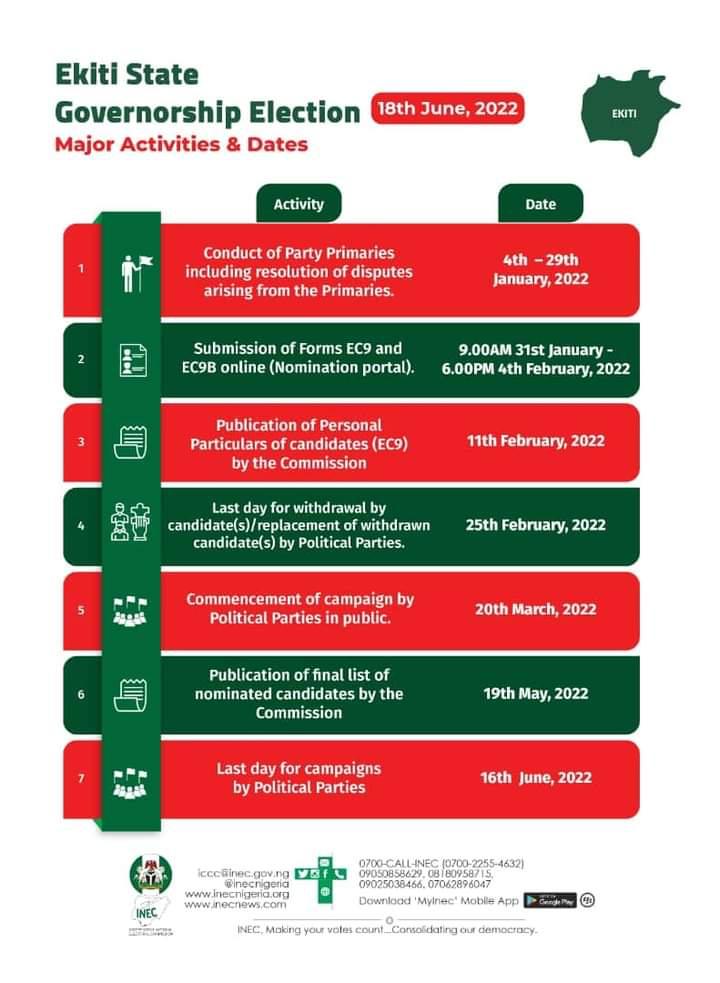
Let us attempt a comparison of the three handovers:
2014 was that of victory, vengeance, and reversal. Dr. Kayode Fayemi of APC lost to Ayodele Fayose of PDP. Fayose returned for a second term. How did the succession play out? There was mass reversal of Fayemi-era policies, projects got stopped mid-way, contractors were chased off site. There was mass dismissal and redeployment of civil servants and political appointees, salary arrears got piled up. By 2016, Ekiti workers were already owed 6-8 months. Political violence was spiked. The state became known for Ekiti war rhetoric and court cases.
This cost the state 4 years of policy discontinuity. Investors pulled back. The state spent more energy fighting the past than building the future. The lesson? When succession is punitive, governance suffers.
In 2018, there was another break, reversal and reset. Fayose’s anointed candidate, Prof. Kolapo Olusola, lost to Fayemi of APC. Fayemi returned for a second term and restarted stalled projects from his first term, also beginning new ones. Salary payments were restored and arrears cleared in batches.
But still, it was a break in governance philosophy. Civil servants, contractors, and policy direction changed again. The political climate remained tense, with PDP challenging the result.
This cost the state another 6-12 months of loss in transition and realignment, sparking distrust between MDAs and the new government.
Even when the change is positive, a change in party and personnel would reset the system.
In 2022 Ekiti witnessed the first seamless handover within the same party -from Fayemi to Oyebanji, popularly referred to as the JKF-BAO transition.
Fayemi’s SSG and Chief of Staff, Biodun Abayomi Oyebanji, won the APC primary and the governorship election. The succession played out well. No mass dismissals. No project abandonment. No “probe and reverse” cycle. Salary payment was carried out around the 25th, and this has continued without break. Roads, schools, and PHC get upgraded under the same contractors and framework.
Political temperature has since stayed low. Fayemi handed over to his successor in October 2022 without drama; the first time in the history of Ekiti that a predecessor would attend the swearing-in ceremony of his predecessor. The real baton exchange.
What are the positives?
There was the preservation of institutional memory preserved. BAO didn’t need 6 months to “study files.” He had written some of them.
There was policy continuity. The Ekiti Knowledge Zone, farmstead roads, and health upgrades kept moving.
There was investor confidence. Development partners saw a government that didn’t cancel agreements every 4 years.
The morale of workers soared. Civil servants stopped fearing October 16 of every 4 years.
The lesson? When a governor hands over to someone who understands and owns the plan, the state doesn’t lose 12 months to transition.
In this 2026, BAO will be handing over to himself. This is the hallmark of continuity.
If BAO wins in 2026, and he surely will, Ekiti will witness something it has never seen: a governor completing one term and starting a second without a break in personnel, policy, or priority. This is what some other states had benefitted from in the past and still benefitting from even now.
This matters, because most Ekiti projects usually have a 4-year lifecycle dictated by elections. A road started in Year 1 gets abandoned in Year 5 if the new governor has a different plan. A second BAO term means 8 years of unbroken execution. The Knowledge Zone, rural electrification, and agriculture clusters can move from “launched” to “functional.”
There will be zero transaction cost of transition. A new government usually spends ₦billions in political settlements, new appointments, and policy reviews. The BAO to BAO will eliminate this cost. Money stays in roads, schools, and health.
The BAO to BAO administration will score instant credibility with the people.
Ekiti voters are tired of promises that die with a governor. A second term for BAO turns campaign promises into a 8-year record. “He said, he did, he will finish” becomes a real political argument.
For the APC in Ekiti, the BAO to BAO will serve as a proof that winning, delivering, and returning is possible. It will move the party from “federal might” politics to “record of service” politics.
Bottom Line:
Ekiti’s problem has never been that of ideas. It’s been that of 4-year reset button.
2014 and 2018 showed what happens when succession means starting over. 2022 showed what happens when succession means continuing.
If BAO wins in 2026, and he surely will, he’ll be the first in Ekiti to do 8 consecutive years. That’s why it’s being framed as “BAO handing over to himself” and the hallmark of continuity.
The closest was Fayemi 2010–2014 and 2018–2022. Fayemi had a 4-year gap in between.
2026 is the chance to prove that continuity compounds results. Ekiti won’t just have a governor for 8 years, it will have 8 years of a single, coherent plan.
Know this, know peace.

Segun Dipe is the Publicity Secretary of the All Progressives Congress, APC, in Ekiti State.