



Yesterday Monday, the 1st day of June was another significant day in one of the ongoing door-to -door outreaches of Governor Biodun Abayomi Oyebanji, as he met with Ekiti Artisans and other Private Sector groups. In every serious society, elections are ultimately decided not by propaganda or manufactured stories, but by the everyday experiences of the ordinary people. The typical market woman in the market does not judge government by social media banters and arguments; she judges by the number of customers entering her shop. The artisan does not measure governance by political bitterness; he measures it by the availability of jobs and patronage he enjoys. So is the transporter who measures good leadership by the movement of commuters and how commerce flourish. The shop owner measures it by the ability of shop tenants to pay their rent. The farmer measures it by access, support and peace. In the final analysis, the true verdict of governance is always written in the daily economic realities of the people, and that is why the overwhelming support now coming from artisans, traders, entrepreneurs and the organised private sector for Governor Biodun Abayomi Oyebanji is both significant and symbolic. This is not a political accident, but the natural consequence of a government whose policies have directly touched the grassroots economy of Ekiti State.
Unarguably, one of the greatest challenges confronting many States’ economies in Nigeria was the collapse of purchasing power caused by irregular payment of salaries, poor economic planning and unstable governance. Once salaries stopped coming, businesses immediately felt the impact. Markets became empty,shops lost customers, artisans lost patronage, economic activities slowed down, and invariably, poverty expanded quietly, with the ordinary people bearing the heaviest burden. Governor Biodun Abayomi Oyebanji understood this reality very early in his administration.
He understood that governance is not merely about occupying office, but that, it is about creating liquidity circulation within the economy. He recognizes the fact that civil servants are not isolated individuals, but economic channels through which money flows into markets, businesses and communities. When workers are paid, traders smile, and when traders smile, artisans find work. When artisans find work, families survive, and when families survive, communities remain stable.
This is the simple but powerful economic philosophy that has quietly transformed the atmosphere in Ekiti State; multiplier effects of commerce and economic activities, leading to money circulation. By ensuring prompt payment of salaries and entitlements, Governor Oyebanji does not merely fulfils an administrative obligation; he revives economic confidence across the State. He restores dignity to workers, stability to businesses, and the effect is visible across towns and communities.
Economic activities have become more vibrant because people now possess the confidence to spend, to trade and invest again. It is therefore not surprising that organised groups within the formal and informal sectors are openly identifying with the Governor’s second-term aspiration. These are people who operate within the realities of the economy every day. They understand the difference between hardship and relief; they know when governance is helping and when it is hurting. Their support for Governor Oyebanji is, therefore, rooted in practical experience, and not political gerrymandering.
Beyond salary stability, BAO’s administration has consistently demonstrated a commitment to promotion of local enterprise and encouragement of Ekiti-based businesses. The emphasis on local content has created more opportunities for indigenous entrepreneurs and service providers. Small businesses that once struggled for visibility are now gradually finding space within government patronage and economic activities. The administration’s business-friendly posture has also strengthened investors’ confidence and encouraged broader participation in the State’s economic development.
Yet perhaps the most remarkable achievement of Governor Oyebanji’s administration is the atmosphere of relative peace and stability that currently exists in Ekiti State. Development thrives where peace exists, as investors only go where stability is guaranteed. Businesses only grow where people feel safe and secure, and Commerce flourishes where there is social harmony. This is why the Governor’s warning against fake news, misinformation and deliberate attempts to create panic must be taken seriously by all lovers of Ekiti. Societies do not collapse overnight. More often than not, instability begins with reckless falsehood, irresponsible propaganda and the deliberate poisoning of public trust. However, Ekiti people are politically sophisticated enough to separate facts from manipulation. They understand that those who cannot confront visible achievements often resort to rumours and distractions.
Today, the achievements of Governor Biodun Abayomi Oyebanji in the last three years plus, are difficult to deny. Road projects are ongoing, and economic activities are expanding. Educational institutions are receiving attention, while Agricultural initiatives are growing. Infrastructure renewal is visible, while commercial confidence is improving, and more importantly, governance itself has become calmer, more inclusive and more humane.
Governor Oyebanji has also succeeded in building a rare political atmosphere where governance is not distracted by bitterness or vendetta. Instead of fighting imaginary enemies, the administration has concentrated on, and deployed its energy on development, partnerships and service delivery. This maturity has helped create an environment where both the public and private sectors can function with greater confidence.
So, as the June 20 governorship election approaches, the political direction of Ekiti State appears increasingly clear. The people are not merely listening to campaign speeches; they are comparing realities. They are asking themselves a simple question: who has helped preserved stability, revived commerce and sustained the economy? For many artisans, traders, workers and entrepreneurs, the answer is already obvious. They have seen a government that understands that the economy is not built only in the government offices but also in markets, workshops, farms, Motor Terminals and business centres. They have seen a Governor who recognises that artisans and private businesses are not minor spectators in development, but critical stakeholders and builders of the State economy. This explains why support for Governor Biodun Abayomi Oyebanji continues to deepen organically across communities and sectors. The movement is no longer confined to political structures alone; it is increasingly becoming a grassroots economic consensus.
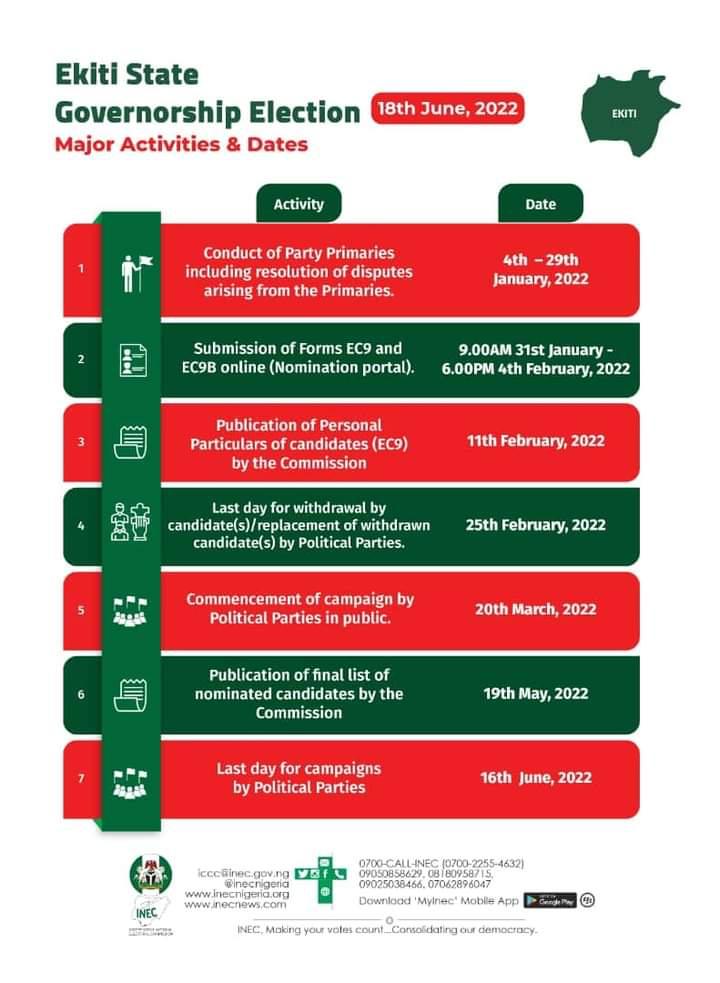
From Ado to Ikole, from Ikere to Oye, from Ijero to Ilawe, from Omuo to Ise- Ekiti, the message is clear and unambiguous among workers, traders, artisans, transporters, youths and entrepreneurs. The message is that continuity is safer than uncertainty,stability is better than disruption, and progress must not be interrupted. The coming June 20 Governorship election, therefore, represents more than a political contest; it is a referendum on economic stability, peaceful governance and sustainable development. It is about whether Ekiti will continue on the path of gradual but steady growth or return to the era of economic anxiety and uncertainty. And judging by the growing alignment of the organised formal and informal sectors, the people appear determined to move forward, and not backward. That is why the artisans are speaking, why the traders are mobilising, and that is why the private sector is standing up for BAO, and the APC. That is why the grassroots are responding, because when workers prosper, businesses flourish, and when businesses flourish, the State moves forward.
Undoubtedly, it’s BAO2BAO;BACK2BACK
Ekiti a gbe wa
Oju o ni t’iwa 🙏🏻

SnrKosija@oshojokini