


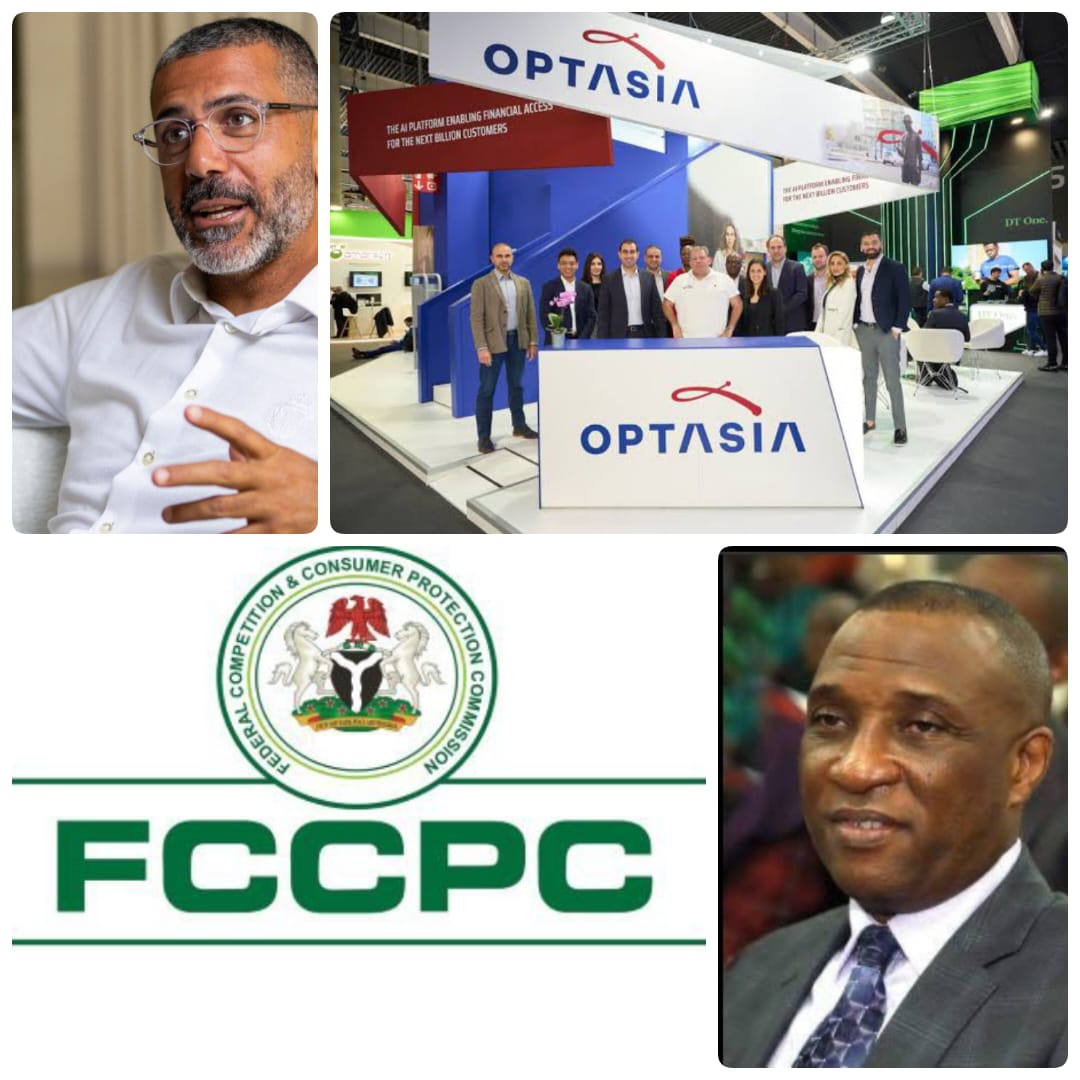

AirtimeLending: Anatomy Of A Phantom Presidential Approval Plus The N3 Trillion Airtime Lending Myth
The Fast-Moving Fiction!! Why the conflicting airtime lending stories should worry everyone, including the government itself.
This is no longer just an airtime lending story.
It is becoming a test of regulatory credibility, investor confidence & public trust in how government institutions communicate & make decisions.
Yesterday, a massive story took over the timeline: headlines claimed the Presidency was dismantling South African firm Optasia’s “monopoly” in the airtime lending market to stop a staggering N3 trillion annual capital flight.
It sounded like a textbook case of economic patriotism. There’s just one massive problem: none of it is true. Let’s break down the facts. 👇
The @fccpcnigeria’s Hard Refutation
The Federal Competition and Consumer Protection Commission (FCCPC) has officially stepped forward to completely dissociate itself from the report.
The Truth: The FCCPC has not submitted any names of local fintechs to the Presidency.
They stated clearly that they are completely unaware of these claims.
The entire narrative was built on phantom “sources” that don’t exist.
Doing the Math (Because the Articles Didn’t)
The most glaring red flag in the initial narrative was the “N3 trillion annual profit” claim.
The entire Nigerian airtime and data lending industry is widely estimated to be capped at roughly N400 billion per year.
An entity cannot physically extract N3 trillion in profits from a market that is only worth N400 billion in total volume. The math simply isn’t mathing.
The Court Order Ignored ⚖️
Beyond the impossible math, the narrative completely bypassed the rule of law.
The Federal High Court in Lagos has an active ex-parte order (Suit No. FHC/L/CS/760/2026) filed by WASPAN.
This order explicitly suspended the DEON Regulations—the very framework regulating this sector.
As a law-abiding agency, the FCCPC had already paused all enforcement days ago, awaiting the next court hearing on July 20, 2026.
A Note to the Timeline
To the accounts and platforms that aggressively pushed the initial, unverified narrative: supporting local content is vital, but anchoring it to fabricated data and a disregard for court orders hurts the ecosystem.
The FCCPC has set the record straight. Let’s delete the hype and amplify the facts.
Beyond the boardrooms & courtrooms are millions of ordinary Nigerians.
The trader who needs airtime to reach suppliers.
The transport operator relying on data to secure customers.
The student attending online classes.
The entrepreneur managing sales through a mobile phone.
The artisan waiting for client calls.
These Nigerians are not interested in regulatory disputes.
They are interested in staying connected.
When uncertainty delays services, the impact is felt far beyond the telecom industry.
The lesson here is simple.
Public confidence is built when government institutions communicate clearly.
Investor confidence is built when regulatory actions are predictable.
Economic confidence is built when facts are consistent & verifiable.
Whether the issue is market competition, local participation, consumer protection or capital retention, one thing remains true:
Trust is an economic asset.

Once uncertainty enters the system, everyone pays a price — government, investors, businesses & consumers alike.